
Last Updated on September 23, 2026
Localizing and translating your website allows you to quickly interact with prospective worldwide customers about your products and services. When content contains unfamiliar names or terms, a phonetic spelling generator can also help provide readable pronunciation guidance for international audiences.
However, just translating and localizing your website is insufficient. Language-specific resources may also need to account for native scripts, transliteration, and cultural naming conventions, as demonstrated by a Russian name generator that presents names in both Cyrillic and romanized forms.
Your efforts will only deliver real results if you take the further step of implementing multilingual SEO.
We’ll discuss what multilingual SEO is and why you should use it on your website.
What is Multilingual SEO?
Multilingual SEO is the discipline of optimizing your website across several languages. The idea is to guarantee that various audiences speaking different languages can quickly find your site’s content from anywhere in the world via organic search.
Multilingual SEO helps you develop content in multiple languages and ensures it reaches the intended audience.
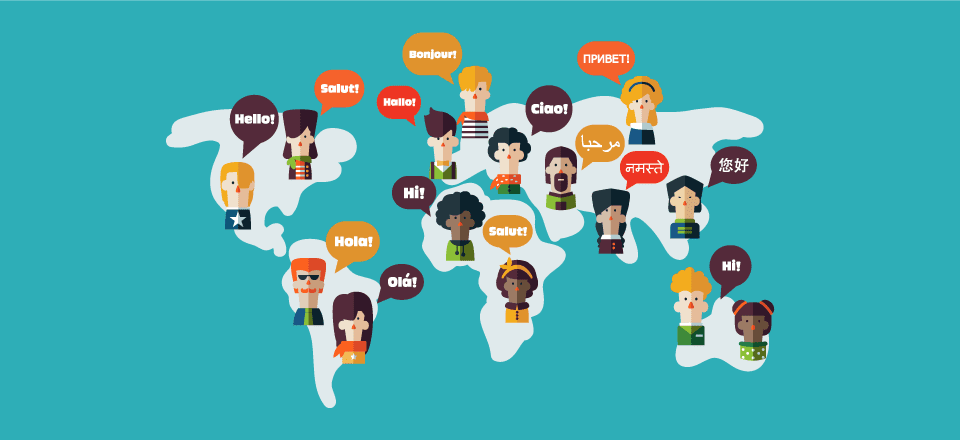
While American English is the most common language on the Internet, only a small fraction of netizens claim it as their native language. This implies that if you want your firm to succeed on a worldwide scale, you must expand your SEO efforts beyond English.
When translating Google search results, using automatic translation tools such as Google Translate may be the easiest option. However, a multilingual website SEO plan is essential if you want the greatest results.
How to do multilingual SEO?
- Start with Quality Keyword Research
To begin, conduct a thorough keyword analysis before translating your website content. This is because various subsets of your global audience have distinct interests—or search intent.
Consider the keywords ‘content production’ in English and ‘creation de contenu’ in French.
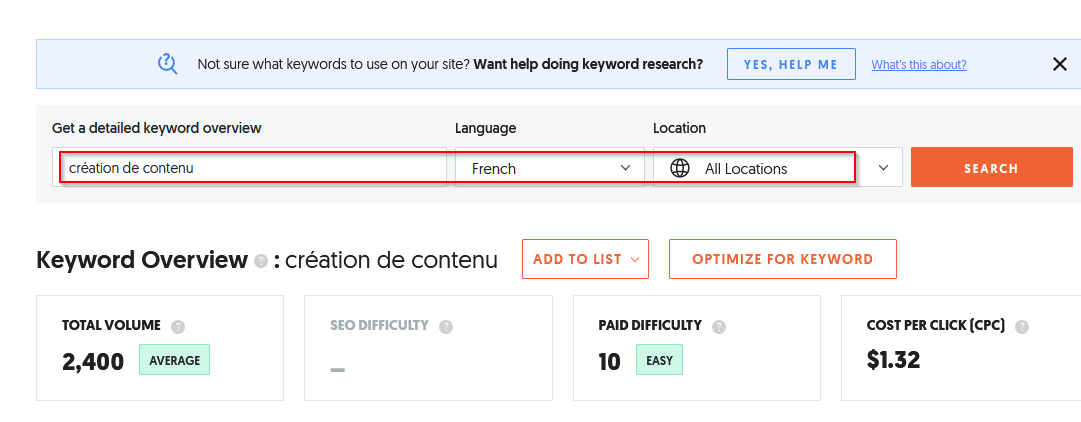
The French translation has far lower search traffic than the English version.
Quality keyword research helps you put your translation and localization efforts into perspective. This allows you to analyze which keywords to focus on for each translated version of your website.
Gaining mastery of properly using keywords in your language may be challenging. You will avoid utilizing keywords that do not improve your content’s SEO performance. Doing this in numerous languages you do not understand might be much more difficult.
- Translate your URL Slugs
When translating your website, you should also pay attention to the URL slugs. Slugs are components of your URL that come after your domain name. For example, if the URL for your website’s payments page is mysite.com/payments, a consumer looking in French should see mysite.com/paiements.
The slugs used here are “payments” (English) and “paiements” (French). This is beneficial to both search engines and human visitors, as it makes it clear that these are two copies of the same website in different languages.
- Apply hreflang Tags
Hreflang tags provide direct messages to search engines about the language and geographical targeting of a webpage’s content.
Hreflang tags are essential for web pages that serve different nations or languages. They guarantee that search engines present the most suitable version of the material to viewers.
For example, if your site offers information in English for the United States and the United Kingdom, properly implemented hreflang tags will help distinguish between these versions, accommodating minor differences in language usage and preferences.
To execute this accurately across multiple regional pages, many businesses choose to hire a dedicated software development team that can manage technical SEO elements and ensure flawless international targeting.
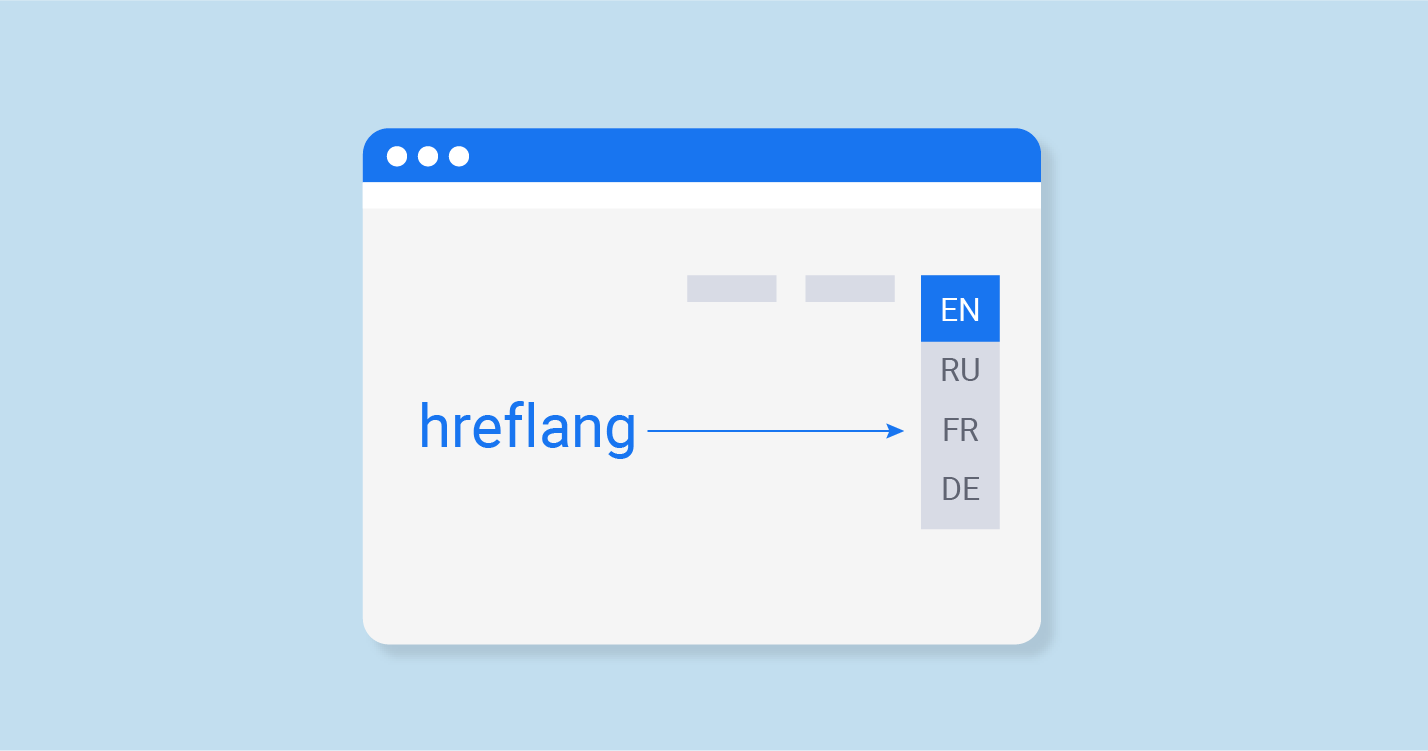
Hreflang tags assist prevent duplicate content penalties by indicating the languages or regions a page is intended for. Even if the content is similar or identical across language variants, hreflang tags indicate to search engines that this is deliberate rather than manipulative duplication.
A hreflang tag is an HTML attribute used in a webpage’s section. It informs search engines like Google about the page’s language (using ISO 639-1 codes) and geographical target (using ISO 3166-1 Alpha 2 codes).
For example, a French version of a site for people in France might use the hreflang tag. This tag helps search engines realize that this page is intended for French-speaking people in France.
- Create a Multilingual XML Sitemap
The multilingual sitemap, like any other sitemap, helps Google better comprehend the structure of your website. A multilingual XML sitemap informs search engines of the language and locale used on each page of the website.
- Translate the Site’s Metadata
Finally, certain parts of your website are hidden from visitors since they are only visible to search engines. These components are collectively known as metadata. It is practically impossible to drive traffic to your website from individuals who speak languages other than your native language if your metadata is not translated.
To be more specific, your site’s metadata consists mostly of the SEO title and meta description for each page. Other aspects include tags, picture alt text, and so forth. To achieve the best multilingual SEO performance, you should translate each of these items for each translated page of your site. The good news is that TranslatePress makes this process simple.
- Strategic Internal Linking
Internal linking, the practice of linking to other pages on the same website, is critical for SEO. It helps search engines comprehend your site’s structure, distributes page authority across your domain, and makes your site easier to navigate.
When administering a multilingual website, it is critical to ensure that internal links point to the appropriate language version of a page. This approach improves the user experience and your site’s SEO performance by sending unambiguous signals to search engines about the connection between pages in different languages.
Multilingual SEO: A Key to Business Success
For a multilingual website, SEO is, without question, an essential tool for expanding your organization globally. Translating your website into one or more languages benefits your business by increasing multilingual traffic and conversions. However, merely translating your website is not sufficient.
To take your business to the next level and connect with the enormous worldwide audience you’ve always coveted, you must use SEO best practices for language.
The process may be difficult, but luckily Marketing Lad provides a straightforward solution that makes multilingual SEO a snap.
FAQ
1. What is the difference between International and Multilingual SEO?
Multilingual SEO is the practice of optimizing a website’s content for audiences who speak multiple languages. This is especially significant for firms looking to reach a larger global audience.
International SEO, on the other hand, is content optimization for overseas audiences who may not speak the local language. For example, a company based in the United States may wish to reach a UK audience. Because of the many variations in the English language and cultural contexts, the company needs worldwide SEO.
2. What do you need to set up multilingual SEO in WordPress?
- Properly researched keywords
- Hreflang tags
- A robust translation plugin
- A readable URL