On This Page2

Making your local business visible and accessible on Google and other search engines is crucial for brand development. It may influence whether you will thrive or fail in the future.
You’ve completed your Google Maps marketing responsibilities.
What comes next?
Effectively tracking your local rankings.
This may be a challenging undertaking because there are various nuances to be aware of when Google. Displaying local results to understand how to effectively track and position your website for the results.
Do you wish to monitor and analyze your local SEO rankings and keyword positions? If that’s the case, you’re in luck!
Check out the comprehensive guide and lesson for checking your local search engine optimization rankings.

This blog post will go over the best strategies to achieve just that. It is critical to monitor your rankings to assess the effectiveness of your SEO approach.
If your website needs to rank better for relevant keywords. Then you’ll need to revise your present SEO approach.
Why Keep an Eye on Your Local SEO Rankings?
It is critical to monitor your local search engine rankings. Because they can give you useful information about how effectively your SEO approach is functioning.
Checking your keyword placements and other ranking indicators will help you understand how prominent your company is. To prospective consumers in the region, which may be critical for generating foot traffic and, eventually, income.
If your Google My Business page isn’t ranking very high in local search results for relevant keywords. Then this is a strong indication that you need to revise your SEO approach.
Several things might influence your rankings. Included are the completeness of your Google My Business listing, the number of reviews and average rating, relevancy, and proximity to the searcher’s location. As well as your brand’s general reputation.
Best Practices for Local Rank Tracking You Should Know!
The world of local SEO is complicated and ever-changing, and there is no one-size-fits-all solution for incorporating local rank tracking into local SEO strategies.
However, by following the best practices we described below, you may be well on your way to getting the local ranking data. You need to evaluate and improve your Google rankings, regardless of the sort of business you run or where you are situated.
- Select a Local Rank Tracker Designed for Google Business Profile Monitoring
The first step in achieving success with local rank tracking is to select the proper solution for your needs and goals.
For most local businesses, especially those focused on selling to a hyper-local audience. This means using a local rank tracker that explicitly records firms’ Google Business Profile ranking data, such as Google Rank Check.
This is because most consumers don’t go beyond the top three results on Google. When searching for a service they want or a type of company they wish to find near them, they see three Google company profile listings (known as the Google 3-Pack).
Because most potential consumers look at these listings to read reviews and learn more about their alternatives. Before deciding which business to buy from, it is highly recommended to use a local rank tracker based on Google Business Profile data.
Other methods of local SEO, such as optimizing websites to appear higher in organic search results, are still vital. But improving Google Business Profile listings using a local rank tracker should be a key concern.
- Finish Your Google Business Profile
After you’ve decided on a local rank tracking solution, make sure any Google Business Profile listings you control are as comprehensive as possible before beginning local rank tracking.
This ensures that the listing is in a solid starting position from which to examine performance. Begin making more precise adjustments and employing more advanced techniques to start outranking competitors.
You don’t want to waste time and money gathering information from an incomplete Google Business Profile, because incomplete listings don’t rank well.
- Research Local Keywords
When you’re ready to begin local rank tracking, one of the first things you should do is study the local keywords associated with the business you’re monitoring. This will allow you to collect local rank-tracking data and begin optimizing for relevant keywords.
Some of the phrases you’ll be watching will be from the business categories you’ve chosen on your Google Business Profile, but it’s also a good idea to investigate additional relevant keywords that aren’t available for Google company listings.

For example, you should investigate what geo-specific keywords people are using to find your business and rivals. A query such as deck builder in San Diego combines a defined service with a clear location, making it more useful for local rank tracking than a broad term such as “deck builder.
Find a few keywords you want to rank for in the Google 3-Pack, then start local rank-tracking scans for them to get your local SEO campaign started.
- Experiment with Different Map Scan Grid Sizes
After you’ve identified some keywords for which to perform scans, you should experiment with different grid sizes for your scans. This will help you strike the right balance between the amount of data you receive and the amount you spend on rank-tracking scans.
Every business is unique in terms of location and competition, and while there are some general guidelines for setting scan settings. Experiment with the radius and number of data points in your scans to see what works best for your business and budget.
- Compare Data to Competitors
Local rank tracking isn’t just for company listings you maintain; you should also run local ranking scans on rivals to identify top competitors and opportunities to outrank them.
By comparing your company’s reports with those of competitors, you can identify areas where they excel in ranking. This shows where you need to step up your local SEO efforts, which can be low-hanging fruit for you to snatch and gain a better position with little effort.
- Keep Optimizing
Local SEO is not a one-time event, but rather a continuous process that must be maintained and improved regularly.
Not only are your present competitors adjusting their local SEO methods to outrank you on Google. But new competitors are continuously entering the market, and Google’s algorithms are always evolving.
All of these factors may have an immediate impact on your local search results, so you should continuously collect local ranking data. Use it to make continuing improvements and apply new local SEO methods as required.
Pro Tip: Run local rank tracking scans regularly, weekly, bi-weekly, or monthly, to ensure you’re always working with the most up-to-date ranking data.
Other Insights Found from Local Search Rankings!
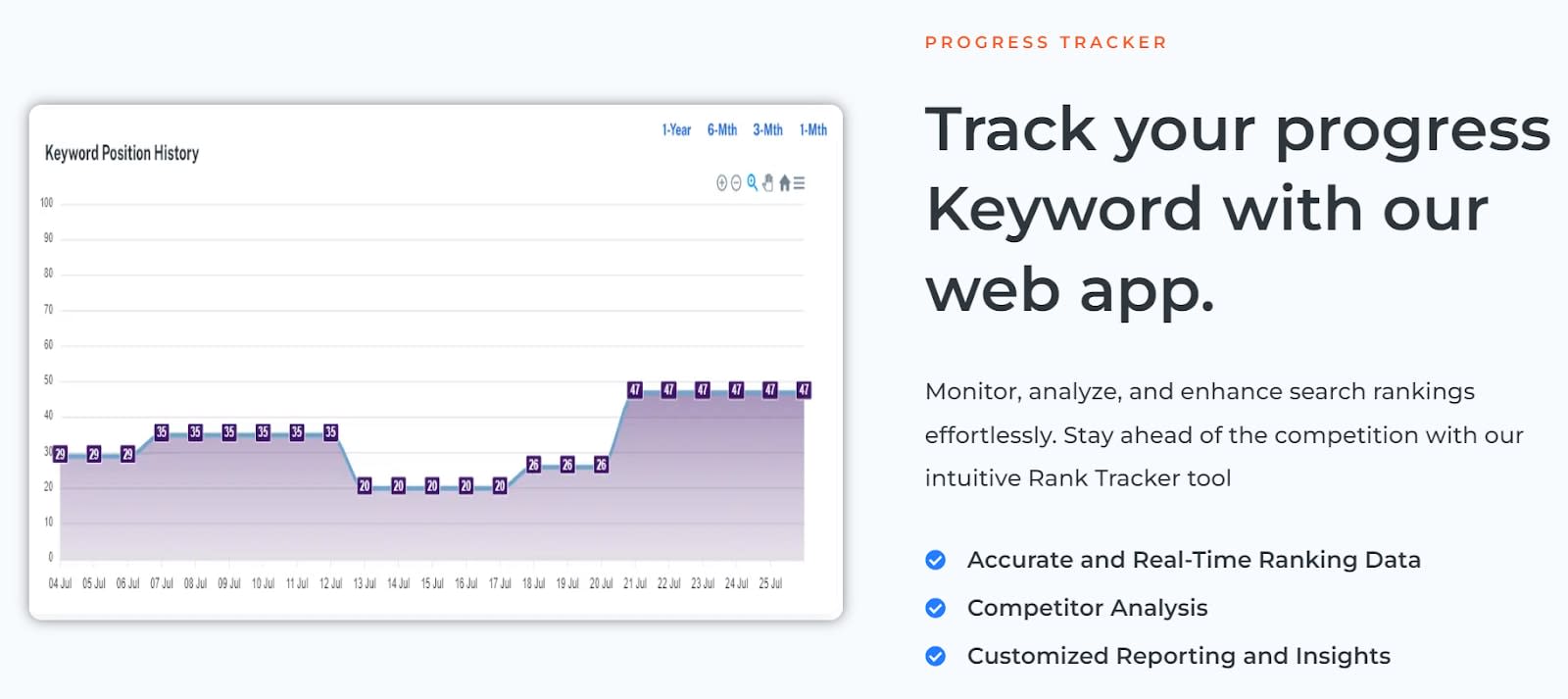
Tracking your local search engine results might provide you with additional insights. Continue to track and evaluate your progress; you may look for trends in the data and make changes as needed.
If your website or GMB listing consistently ranks higher for specific keywords in one location than in another. This may signal that you should devote more resources to enhancing your SEO approach in that region.
If, on the other hand, your listing regularly performs well in one location but not another. This might signal that you need to increase your local marketing efforts in the lagging region.
Alongside local search optimization, businesses may use an SMM panel for business to support social media visibility and audience engagement in areas where broader online promotion is needed.
Alongside local search optimization, businesses may use an SMM panel for business to support social media visibility and audience engagement in areas where broader online promotion is needed. Another thing you can learn from your local ranking data is whether any negative reviews have affected your results.
If you see that your average rating and reviews have decreased over time. This might indicate that you need to resolve any quality concerns with the items or services.
Tracking your rivals’ local SEO rankings is an excellent way to gain a competitive advantage in local search results.
You may learn what works and what doesn’t in terms of ranking variables, techniques, and trends. By keeping a watch on your rivals’ methods and progress. This helps you to fine-tune your plan and remain ahead of the competition.
Tracking your local search engine rankings is critical to success in today’s competitive online scene. Whether you are a small business owner trying to improve your local SEO rankings or an experienced SEO expert. Who looks to keep on top of industry trends and best practices.
The first step is to select a local rank tracker designed for Google Business Profile rank monitoring. So, why not use Google Rank Check now to get your local SEO plan off to a good start?
FAQs
To track your business’s local rankings, use tools such as Google My Business, local SEO platforms, and keyword trackers. Monitor key metrics, such as search visibility, local pack rankings, and customer reviews.
Regularly assess your website analytics and leverage insights from tools that provide comprehensive reports on local search performance. Consistent tracking enables you to gauge your business’s online presence, identify areas for improvement, and stay competitive in local search results.
Local rank tracking is crucial for businesses as it directly impacts online visibility and customer acquisition. Monitoring local rankings provides insights into how well your business appears in local search results, helping you assess your market presence.
It enables businesses to optimize their online strategy, enhance local SEO efforts, and stay competitive. By understanding where your business ranks locally, you can tailor your approach to attract more customers and improve overall online performance.
When tracking local rankings, focus on key metrics like local search visibility, keyword rankings, and user reviews. Prioritize tracking the performance of your Google My Business listing, local pack rankings, and keyword relevance to your business.
Assessing these metrics provides a comprehensive view of your local search presence. Helping you refine your strategy, attract more customers, and enhance your overall local SEO efforts.
Check your local search rankings regularly, ideally at least once a week. This frequency allows you to stay informed about any fluctuations or trends in your rankings. Regular monitoring ensures timely adjustments to your local SEO strategy, helping maintain or improve your position in local search results.
However, avoid excessive checking, as daily fluctuations are common, and take a balanced approach. It prevents unnecessary stress while keeping you updated on your business’ online performance.
Several factors influence local search rankings, including on-page SEO elements, the accuracy and consistency of business citations, the quantity and quality of online reviews, and engagement with your Google My Business listing.
Local relevance, website quality, and mobile-friendliness are also critical. Ensure a strong online presence, optimize for local keywords, and encourage positive customer interactions. It can improve local search rankings, enhancing your business’s visibility in relevant geographic areas.

